Old Park’s Guest House
Winter in SokchoOld Park’s Guest House is a small, overlooked lodging in Sokcho, run by Old Park and staffed in part by the narrator. Its two buildings offer sharply different kinds of accommodation, but both are shaped by age, cold and a precarious business. As visitors arrive by chance and the building’s systems falter, the guest house becomes a close-set stage for the novel’s encounters and a domestic counterpart to Sokcho’s larger atmosphere of waiting.
Layout and Setting
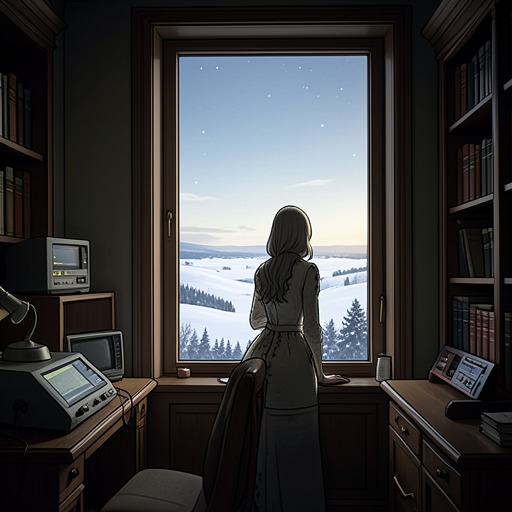
The main building contains reception, a kitchen and visitors’ lounge on the ground floor, with guest rooms along corridors on both levels. Orange and green walls are lit by bluish bulbs; the effect recalls the strings of blinking lights used to attract visitors in the years after the war. From the boiler room, on clear days, the beach can be seen stretching toward the Ulsan mountains. The guest house is not listed in guidebooks, and its guests often arrive less by design than by circumstance: after drinking too much or missing the last bus home.
A long alley behind the main building leads to the second house, a traditional dwelling raised on stilts and restored to contain two rooms. Heated floors and paper partitions give it a different character from the corridors of the main building. Its internal courtyard has a frozen fountain and a bare chestnut tree. In winter, the short walk between the buildings passes Mother Kim’s stall; the alley, ice underfoot and pallid neon make even the guest house’s ordinary entrances feel exposed to the weather.
Accommodation and Daily Operation
When the narrator checks in Yan Kerrand, she is responsible for explaining the house’s routines because Old Park is absent. Breakfast is served in the kitchen beside reception from five to ten in the morning. Toast, butter, jam, coffee, tea, orange juice and milk are included; fruit and yogurt cost extra, with payment left in a basket on the toaster. Laundry goes into a machine at the end of the ground-floor corridor, and a convenience store is fifty metres down the road. The bus stop lies just beyond it. Guests heading to Seoraksan National Park are advised to bring good boots for the snow; the narrator also warns Kerrand that Sokcho offers little to do in winter.
The guest house has limited capacity, and its occupancy reflects the slow season. Its remaining guests include a Japanese climber and a young woman recovering from facial plastic surgery, whose boyfriend joins her for ten days. The woman has been staying for about two weeks. The narrator and Old Park occupy rooms themselves, so the available space is tight; Kerrand is assigned a room in the second building. The narrator chooses its smallest room to reduce cleaning. Inside, pink paint, a plastic imitation-baroque mirror and a purple bedspread crowd a room so short that Kerrand’s head brushes the ceiling and the bed is only two steps from the wall. The communal bathroom is across the courtyard, but a covered walkway shields the route. Kerrand inspects the wallpaper stains and insists on paying five thousand won, despite the narrator’s attempt to refuse.
Seasonal Strain and Changing Use
Business has been slow since Old Park’s wife died the previous year, and he has closed the upstairs bedrooms. The guest house’s deterioration is not merely cosmetic. During a cold snap that reaches minus twenty-seven degrees, the radiators in the narrator’s room and the room formerly occupied by the Japanese climber stop working because the water pipes have frozen. The narrator’s own room is also made uninhabitable by blocked sewage pipes. Old Park offers the portable heater from reception; the stove there, a relic from the 1950s, has already proved useless. With no better option, the narrator moves into the room next to Kerrand’s.
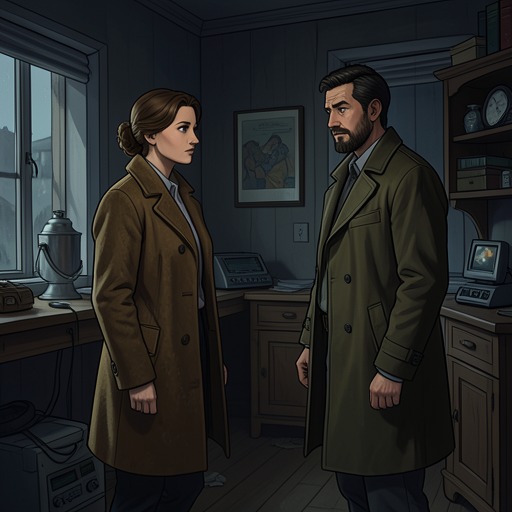
The move changes the practical arrangement of the house into a new intimacy of space. Only a thin paper wall separates the narrator from Kerrand. Later, she hears him drawing through the night, the sound continuing until the early hours. On the fourth evening she knocks at his door and finds him barefoot, tired, and surrounded by boards and sketches, with instant noodles on his desk. The guest house’s paper partitions do not simply divide rooms: they leave the inhabitants close enough to hear one another’s work, silences and movements.
A House Under Pressure
Old Park’s concern is not limited to cold rooms. One evening, while he eats noodles in meat stock and listens to Edith Piaf on the radio, the radio crackles and he switches it off. He tells the narrator that he has seen two more new hotels near the bridge and will need to take out a loan to finish renovating the guest house’s first floor before summer. Without the work, he fears, the business will not survive. The closed upstairs rooms, the broken pipes and the planned renovation all register the same pressure: the house must compete for visitors while struggling to keep its existing rooms usable.
Its position in Sokcho sharpens that tension. The guest house serves tourists and people passing through, yet it is also the narrator’s workplace and home, a place where meals, laundry and repairs continue through the quiet season. The novel’s wider image of Sokcho as a town waiting for tourists, boats, men and spring finds a concrete counterpart here. The guest house waits too: for warmer weather, for repairs and for enough guests to justify the next renovation, while its thin walls and frozen courtyard make suspension part of daily life.